
Notebook Spaghetti and Irreproducible Runs
Data scientists cannot reproduce the exact parameters or datasets used to train models currently running in production.
Move from ad-hoc experimentation to automated, reproducible model training. We build scalable training pipelines with automated hyperparameter optimization, distributed compute, and versioned artifacts.
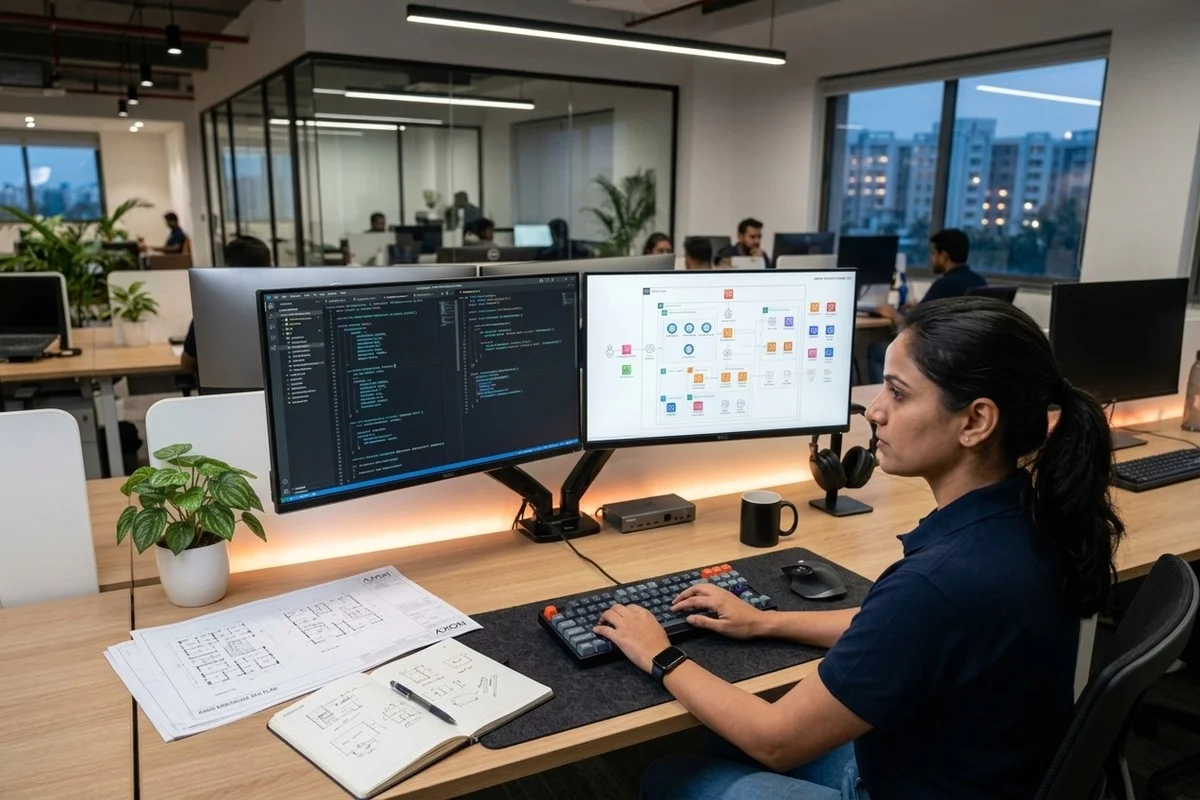
Model Training and Fine-Tuning is the engineering process of iteratively optimizing model parameters on curated datasets to minimize prediction error while ensuring reproducible results across environments.
Ad-hoc training in personal notebooks leads to irreproducible models, untracked hyperparameters, and models that cannot be retrained when fresh data arrives. Robust pipelines ensure continuous, dependable model performance.
Consult our engineering teamReal-world engineering and organizational obstacles addressed by our architecture.
Data scientists cannot reproduce the exact parameters or datasets used to train models currently running in production.
Relying on default parameters leaves substantial predictive accuracy on the table compared to systematic tuning.
Training runs that take days to complete bottleneck research agility and prevent timely model refreshes.
Models remain static for years after deployment because teams lack automated retraining pipelines.
Key technical components engineered and deployed for production stability.
Deploy Bayesian search algorithms using Optuna to locate optimal model parameter combinations efficiently.
Scale training across distributed compute clusters using PyTorch DistributedDataParallel (DDP) and Ray Train.
Log every hyperparameter, dataset hash, code commit, and loss curve into MLflow or Weights & Biases.
Trigger scheduled or drift-activated retraining runs in Apache Airflow with automated regression tests.
Our phased delivery process establishes clear baselines, deterministic testing, and seamless systems integration:
Utilizes PyTorch, Ray, Optuna, MLflow, Docker, and Apache Airflow running on scalable cloud GPU/CPU compute instances.
Discuss architecture detailsConcrete operational use cases illustrating measurable outcomes across commercial environments.
Automatically updating regional demand models nightly with the latest store sales and weather figures.
Training complex acoustic anomaly models across 8 GPUs, reducing training duration from 48 hours to 3 hours.
Retraining payment fraud classifiers weekly on confirmed fraud labels to adapt to shifting attacker techniques.
Tangible performance improvements achieved through disciplined engineering and validation.
100 percent reproducible model artifacts with complete version lineage
Measurable gains in predictive accuracy via systematic Bayesian optimization
Drastically reduced training turnaround times through distributed compute
Hands-off automated retraining keeping models constantly fresh
Clear answers to help you evaluate feasibility, data requirements, and deployment.
Experiment tracking records every parameter, code version, dataset split, and performance metric for every training run. This ensures your team can reproduce any model and audit historical decisions.
We implement automated champion-versus-challenger evaluation. A newly retrained model is only promoted to production if it outperforms the current model on a holdout evaluation benchmark.
Yes. We build cloud-agnostic training pipelines that run seamlessly on AWS, Google Cloud, Microsoft Azure, or on-premise Kubernetes clusters.
Speak with our engineering team in Roorkee to review feasibility, architectural options, and implementation timelines.