
Agents Stuck in Infinite Loops
Engineers build agents using naive loops that repeat failing actions, consume thousands of API dollars, and never complete tasks.
Move from simple chat interfaces to autonomous operational systems. We deliver advanced technical workshops for engineering teams on designing stateful AI agents, multi-agent coordination with LangGraph, and safe tool-calling integrations.
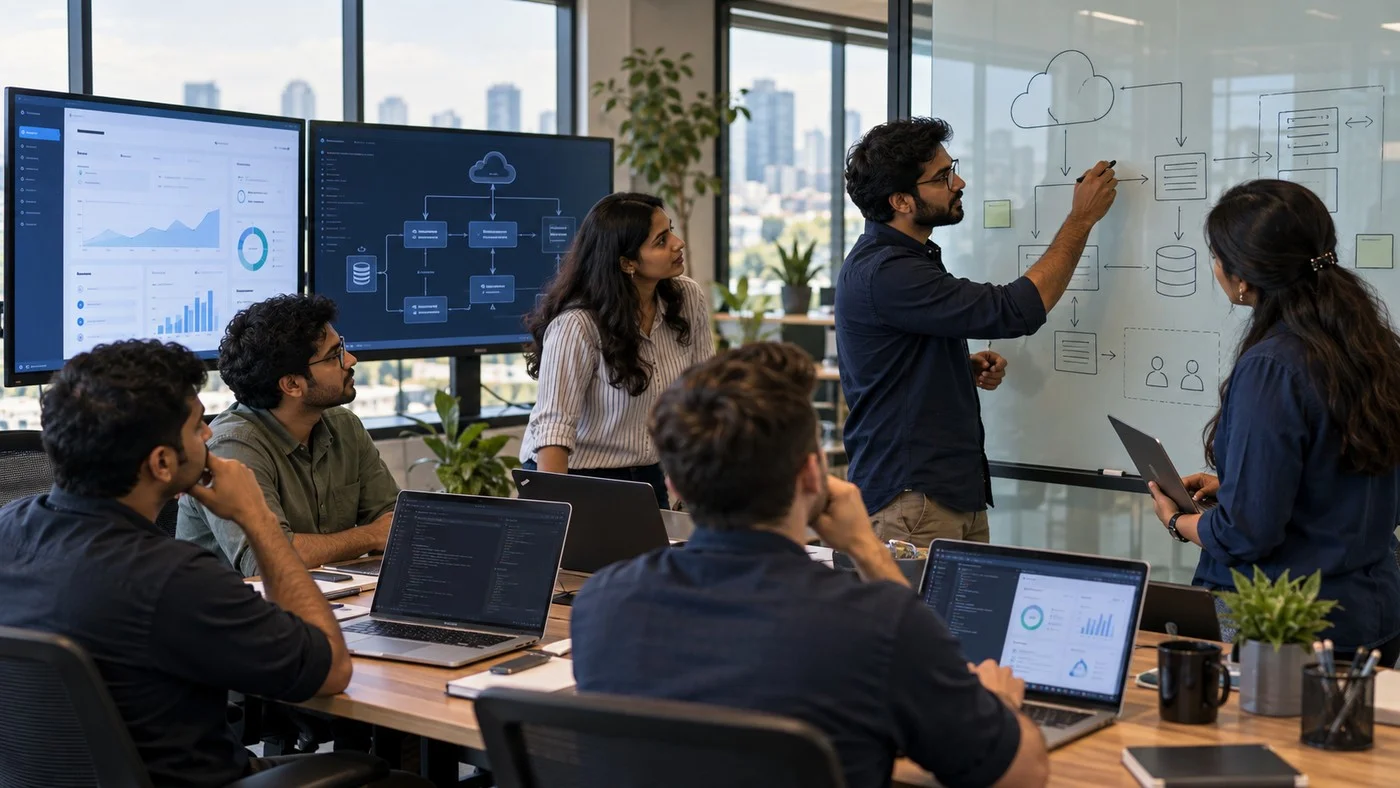
Agentic AI Workshops are advanced technical masterclasses that teach software engineers how to architect, build, evaluate, and govern autonomous AI agents that use tools, plan multi-step workflows, and collaborate in multi-agent networks.
Autonomous agents represent the next major evolution of software engineering. Equipping your developers with agentic design patterns allows your business to automate complex, multi-system operational workflows.
Consult our engineering teamReal-world engineering and organizational obstacles addressed by our architecture.
Engineers build agents using naive loops that repeat failing actions, consume thousands of API dollars, and never complete tasks.
Agents generate invalid function parameters that crash backend microservices and databases.
Agent workflows crash midway through execution with no way to recover progress, forcing users to restart from scratch.
Engineers struggle to implement clean approval checkpoints where humans can review and authorize high-risk actions.
Key technical components engineered and deployed for production stability.
Build cyclic, stateful multi-agent graphs with conditional edges, state checkpointing, and durable execution.
Equip agents with strictly typed Pydantic tools, error recovery feedback loops, and rate limiters.
Design hierarchical supervisor networks, debate loops, and specialist agent roles collaborating on shared goals.
Implement pause-and-resume workflows allowing human reviewers to inspect, modify, and authorize pending actions.
Our phased delivery process establishes clear baselines, deterministic testing, and seamless systems integration:
Advanced technical coding in Python, LangGraph, LangChain, Pydantic, Redis state stores, and OpenTelemetry tracing.
Discuss architecture detailsConcrete operational use cases illustrating measurable outcomes across commercial environments.
Building a multi-agent network that searches internal documents, extracts financial metrics, and writes cited executive memos.
Engineering an agent that authenticates users, looks up database orders, and initiates refund approval workflows.
Building a GitHub agent that inspects pull requests, runs automated unit tests, and drafts code review comments.
Tangible performance improvements achieved through disciplined engineering and validation.
Engineering team equipped to build reliable, stateful autonomous agent systems
Elimination of brittle agent loops and hallucinated tool arguments through strict schemas
Implementation of robust human-in-the-loop governance for high-stakes actions
Accelerated time-to-market for complex multi-system operational automation
Clear answers to help you evaluate feasibility, data requirements, and deployment.
This workshop is designed for software engineers, backend developers, and technical architects with strong Python programming experience. Prior familiarity with basic LLM prompting is helpful.
Simple sequential chains (like basic LangChain) cannot handle loops, retries, or complex state branches. LangGraph provides formal directed graph state machines with persistence, which is mandatory for reliable production agents.
Yes. Every participant builds, tests, and runs a working multi-agent system with functional tool calling and human approval checkpoints during the hands-on coding labs.
Speak with our engineering team in Roorkee to review feasibility, architectural options, and implementation timelines.