
Silent Intrusions with Long Dwell Times
Attackers gain access to networks and operate undetected for months because security logs are not centralized or monitored.
Do not let security breaches go unnoticed for months. We engineer continuous security monitoring architectures, aggregating logs into centralized SIEM systems and alerting your on-call team the moment suspicious activity occurs.
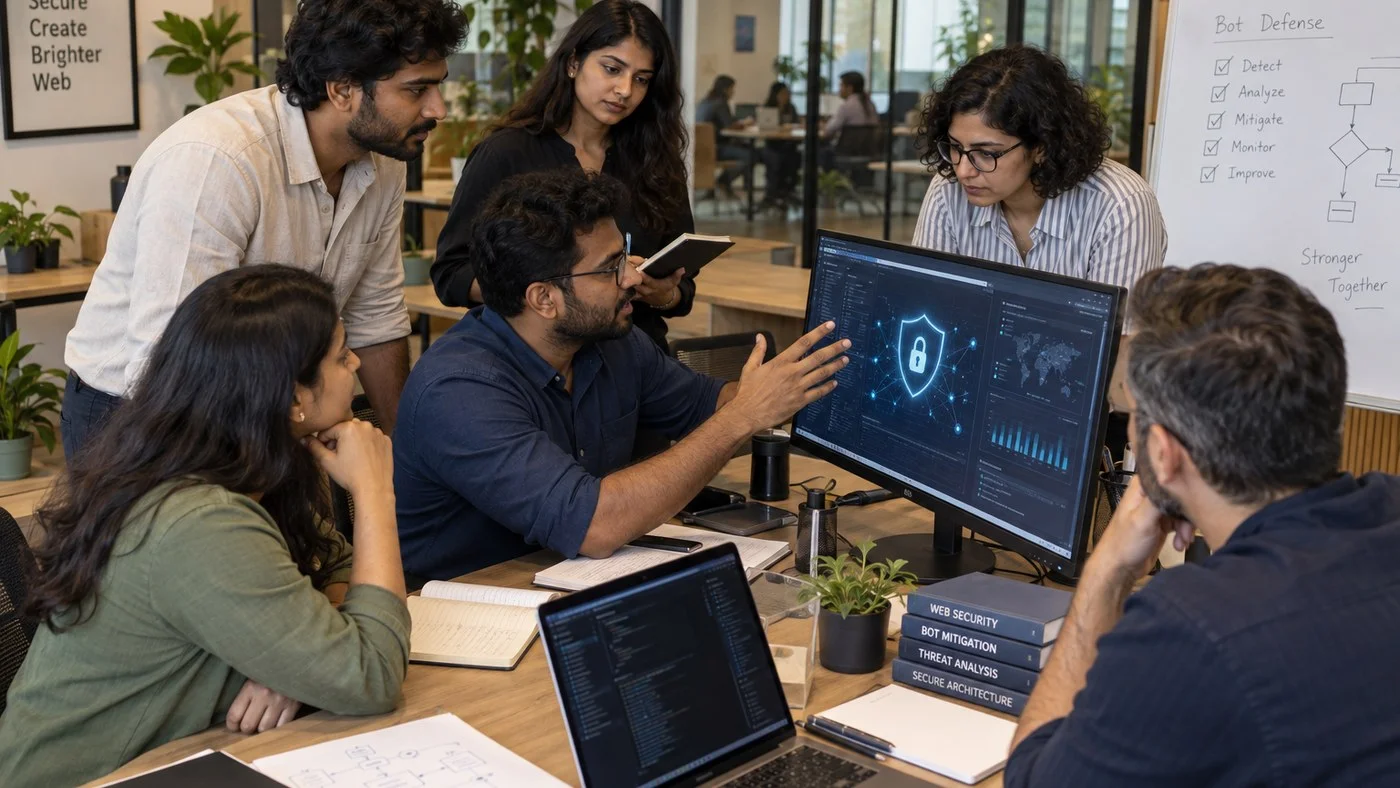
Security Monitoring is the continuous automated collection, correlation, and analysis of security event logs across servers, firewalls, applications, and cloud accounts to detect and alert on suspicious activity in real time.
The average enterprise takes over 200 days to detect a data breach. Continuous security monitoring drastically shortens dwell time, allowing security teams to contain intrusions before data exfiltration occurs.
Consult our engineering teamReal-world engineering and organizational obstacles addressed by our architecture.
Attackers gain access to networks and operate undetected for months because security logs are not centralized or monitored.
Logs live scattered across individual servers and SaaS consoles, making it impossible to correlate attack timelines.
Poorly configured monitoring tools generate thousands of noise alerts, causing engineers to overlook genuine attacks.
Inability to prove who accessed sensitive records or when a specific administrative change occurred during regulatory reviews.
Key technical components engineered and deployed for production stability.
Aggregate authentication logs, cloud trails, firewall events, and endpoint telemetry into one centralized platform.
Implement behavioral detection rules that identify brute-force spikes, credential stuffing, and unauthorized privilege escalation.
Route verified critical security incidents immediately to on-call security engineers via PagerDuty, Slack, and SMS.
Trigger automated containment scripts that isolate compromised virtual machines or revoke leaked API tokens instantly.
Our phased delivery process establishes clear baselines, deterministic testing, and seamless systems integration:
Built using OpenSearch/Elasticsearch, Grafana, Vector, Fluentbit, Wazuh, Zeek, Suricata, AWS GuardDuty, and PagerDuty.
Discuss architecture detailsConcrete operational use cases illustrating measurable outcomes across commercial environments.
Monitoring AWS CloudTrail and VPC flow logs to alert on root account logins, disabled security tools, or unauthorized outbound data transfers.
Monitoring authentication failure rates to detect and block distributed botnet credential stuffing campaigns.
Deploying lightweight endpoint agents on corporate servers to detect suspicious PowerShell or shell executions.
Tangible performance improvements achieved through disciplined engineering and validation.
Threat detection dwell time compressed from months to under five minutes
Unified, searchable security log archive satisfying ISO and SOC 2 audit rules
Low false-positive rate ensuring high engineering trust in security alerts
Automated containment triggers minimizing damage during active security events
Clear answers to help you evaluate feasibility, data requirements, and deployment.
A SIEM (Security Information and Event Management) system is a centralized software platform that collects, stores, and analyzes log data from all your enterprise systems to spot security threats and assist incident investigations.
Most enterprise and regulatory frameworks (such as PCI-DSS, SOC 2, and HIPAA) require retaining security logs for at least one full year, with at least 90 days immediately searchable online.
Yes. We configure automated response webhooks that can revoke compromised API credentials, terminate active sessions, or adjust security group firewalls to isolate an infected host immediately.
Speak with our engineering team in Roorkee to review feasibility, architectural options, and implementation timelines.