
Cloud Latency Prohibitive for Real-Time Safety
Sending sensor readings to the cloud to make an emergency shutoff decision takes hundreds of milliseconds, too slow to prevent machine damage.
Do not depend on cloud connections for time-critical decisions. We engineer edge computing architectures that process sensor data, run machine learning models, and execute emergency logic locally on physical hardware.
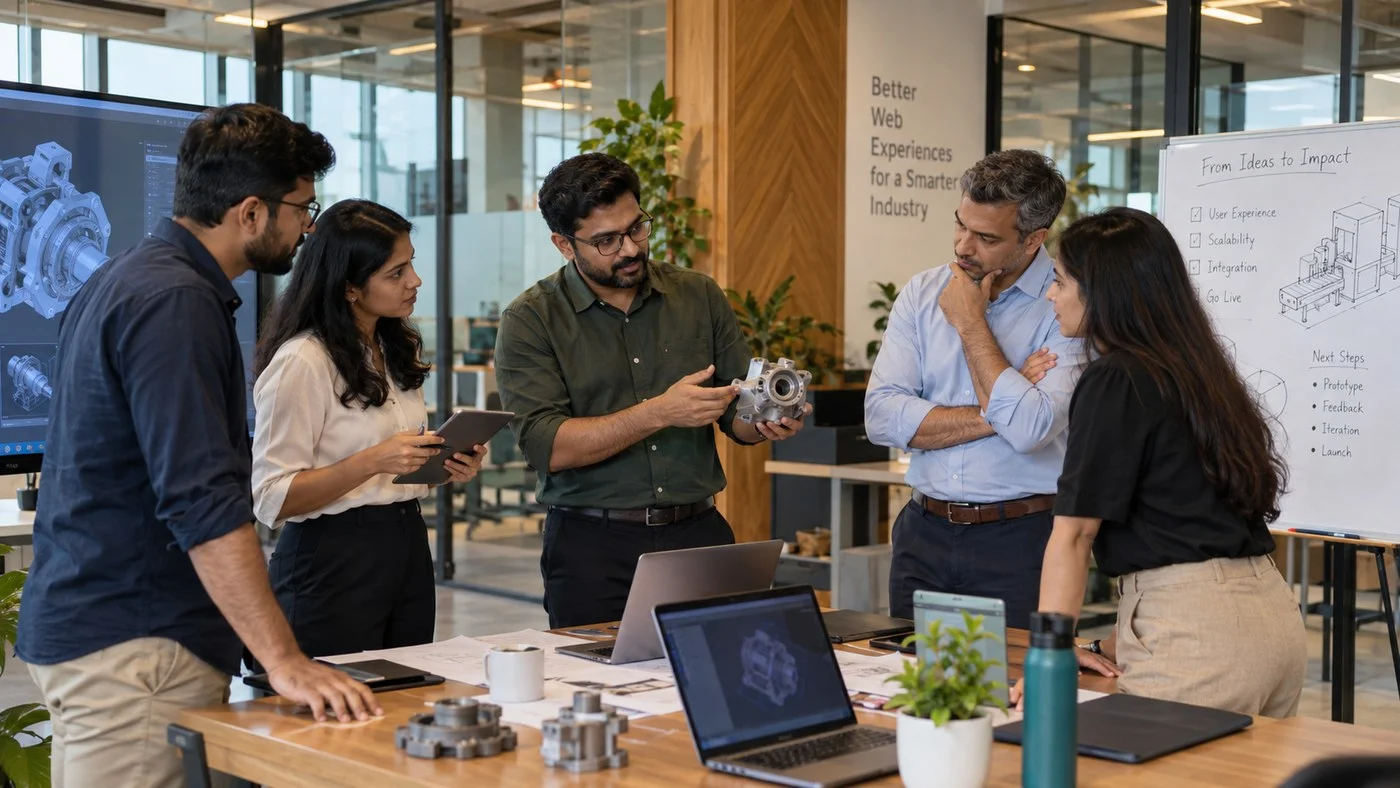
Edge Computing is a distributed computing paradigm that processes and analyzes data near the physical source where it is generated (on local gateways, industrial PCs, or microcontrollers) rather than relying exclusively on centralized cloud servers.
Transmitting raw data to the cloud incurs network latency, requires expensive bandwidth, and fails when internet connections drop. Edge computing delivers sub-millisecond response times, operates offline, and reduces cloud storage bills.
Consult our engineering teamReal-world engineering and organizational obstacles addressed by our architecture.
Sending sensor readings to the cloud to make an emergency shutoff decision takes hundreds of milliseconds, too slow to prevent machine damage.
Streaming raw high-frequency video or vibration telemetry over satellite or cellular connections generates massive telecom bills.
Factories and remote facilities grind to a halt whenever the local internet service provider suffers an outage.
Sensitive factory audio, camera video, or worker biometric data cannot legally leave the physical facility.
Key technical components engineered and deployed for production stability.
Run optimized neural networks (YOLO, MobileNet, audio anomaly detectors) directly on NVIDIA Jetson and Intel OpenVINO edge hardware.
Analyze high-frequency raw data locally at 1,000Hz, transmitting only anomalous events and 1-minute summaries to the cloud.
Buffer sensor data and operational events on local solid-state storage during network outages, syncing automatically upon reconnection.
Manage, update, and deploy containerized edge applications across thousands of physical devices using balenaCloud or K3s.
Our phased delivery process establishes clear baselines, deterministic testing, and seamless systems integration:
Specializing in NVIDIA Jetson, Raspberry Pi CM4, Advantech edge PCs, K3s, balenaCloud, TensorRT, and SQLite local buffers.
Discuss architecture detailsConcrete operational use cases illustrating measurable outcomes across commercial environments.
Running vibration anomaly models on an edge microcontroller to trigger physical safety relays in under 5 milliseconds when a catastrophic spindle jam begins.
Processing high-resolution camera frames locally on an airborne NVIDIA Jetson to trigger precise herbicide sprayers without cloud connectivity.
Processing thousands of drilling sensor streams locally on an offshore rig, transmitting only compressed summaries over expensive satellite connections.
Tangible performance improvements achieved through disciplined engineering and validation.
Sub-millisecond decision latency enabling instant physical safety responses
100 percent continuous local operation during external internet and cloud outages
Up to 80 percent reduction in cellular and satellite bandwidth expenses
Complete local data privacy with sensitive video and audio processed on-premise
Clear answers to help you evaluate feasibility, data requirements, and deployment.
We use secure Over-The-Air (OTA) container management platforms (like balenaCloud or lightweight Kubernetes K3s). We push container updates over encrypted connections with automated rollback if an update fails health checks.
Yes. Modern edge hardware like NVIDIA Jetson Orin packs up to 275 TOPS of AI compute, easily capable of running multiple high-resolution computer vision and acoustic anomaly models simultaneously.
We utilize industrial hardware with wide-input power supplies, supercapacitor backup power, and read-only root filesystems (overlayfs) to prevent filesystem corruption during sudden power loss.
Speak with our engineering team in Roorkee to review feasibility, architectural options, and implementation timelines.